Ruminations

Firstly apologies for the lack of posts recently. I am engaged in the delicious torture that is NaNoWriMo – where one foolishly agrees to attempt to write a WHOLE novel of fifty thousand words in one month. Tis my very first attempt at a novel so wish me luck! At this point I have ten thousand words to go and less than a week! What drives me? Well mainly FEAR. Firstly fear of failure seems to be doing the trick, but maybe, just maybe I am doing it to face those fears. To conquer them. Maybe, just maybe, I can write a good novel…
So it’s fitting that I present to you a guest post that ruminates on this very subject by the deliciously dark REN WAROM:

Tremendously tall Simon requested I write something dark and terrible for my guest post on his blog. So I bent the not very considerable powers of my mind to hunting up a suitably dark and terrible topic. There was a great deal of black smoke. Fire alarms went off in a ten-mile radius. I may have required minor damping down. But all that’s in the past now…

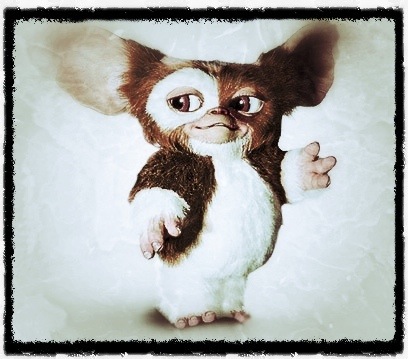
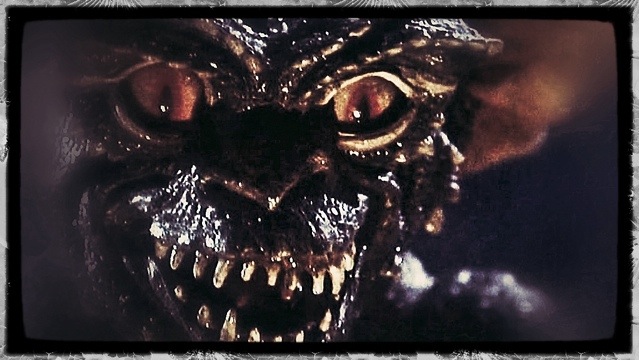
And lo, I have one. Possibly the darkest and most terrible of them all, because not only is it invisible, all pervasive and utterly subjective, it is something we are all slaves to, something we all battle. A mutual foe. A deadly assassin. The thing I speak of my friends, is fear. Oh yes… that nasty little gremlin that lurks within the frontal lobe whispering sweet nothings of doom to the subconscious, placing the plastic explosive of doubt into the soft matter of confidence.

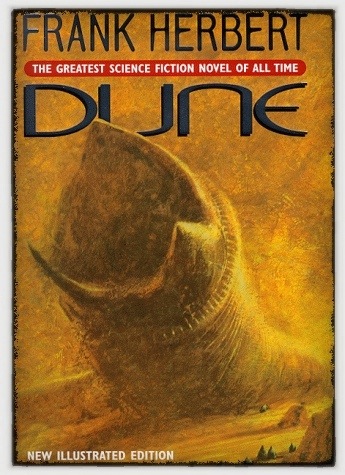
See, I picked up Dune to re-read very recently, and it sparked many thoughts of how one faces fear and drives it out so it can never again darken the door of ambition. How did Dune do this? Simple. It contains my favourite mantra against fear, from the code of the Bene Gesserit. A mantra we encounter when Paul is to face the box with the Gom Jabber against his neck. It’s possibly the finest mantra against fear ever created and it reads as follows (and I’m sure I’m just repeating something everyone knows but it’s so beautiful I couldn’t refrain):

‘I must not fear. Fear is the mind-killer. Fear is the little-death that brings total obliteration. I will face my fear. I will permit it to pass over me and through me. And when it has gone past I will turn the inner eye to see its path. Where the fear has gone there will be nothing. Only I will remain,’

Not only is it narrative poetry, it hits directly on the nub of what fear is, an invader, an interloper, seeking to tear down the walls of our self-belief, our assurance, and bury us in the rubble of defeat. It’s the invading alien that seeks to stop us in our tracks, hold us back, prevent us from growing. It’s the flight not the fight. But often, we’re running away from nothing but shadows.

But what if no one likes me? What if I can’t do this? What if I try and I’m actually not that good? These words, and many more like them, are the tools of fear. The quakes that rock the ground beneath your feet, that weaken the strength beneath your resolve. Fear is why so many of us stop before we ever really even start. Which, when you really think about it, is daft. The shadows may grow large and terrible but, in essence, shadows is all they are. Figments of the gremlin’s powers, wisps, illusions.

They are like the desert oasis reversed. With the lush verdant waterhole being your confidence and the fear as illusions of barren, life-stealing desert. They rise up not to give us hope but to drive hope from us. Make us think that all there is, for miles, is that desert, and that we were fools to think anything otherwise.

As a writer, it’s kind of appropriate to be talking about fear at this time of year, when NaNoWriMo is in full force. It being a giant, heaving mass of bison charging straight at the voice of fear to drive it from the internal prairie (I apologise for that metaphor profusely). It says ‘what the hell if you can’t?’ ‘who cares if no one likes it?’ ‘who cares if it’s not that good?’ ‘Just go DO it.’

That’s the purest essence of facing your fear. Permitting it to pass over you and through you as you just sit down and let the words come, forgetting such notions as ‘can’t’ and ‘failure’. Let’s shove some concrete boots on them and drown them in the Wrimo. Let’s raise pens or fingers and conquer. Let us, in fact, pour the waters of triumph on the gremlin and nuke his arse with a thousand volts of up yours accomplishment.

That’s how it starts, the fight, seeing that gremlin melt to pile of green goo, seeing the lush waterhole of confidence reappear and realising that you’ve been duped by fear. Now don’t think that’s the end of it all. Oh no. You’ll have to do it over and over again if you want to turn that mass of undirected words into a published novel, or make that film career happen, or run that marathon, or begin that baking business, or just get out there more amongst people and live a little.

But if every time you face that gremlin head on, clutching in the one hand your hose of triumph and in the other your thousand volts of up yours accomplishment, then you’ll find that each battle becomes easier and easier. It’s like a muscle, the more you use it, the stronger it gets. Until one day, you look that Gremlin in the eye… and it turns into a cute, singing Mogwai.

And that, my friends, is the day you stop using the hose. And er… stop fearing too. Yeah. Because I totally had a point here. Suck on that fear. Yeah. Suck it.

Ren is a writer of the strange, dark and bizarre. She’s also a certified Pirate-Nun, mum of three spawn and slave to several cats. You can find her stories in The City of Hell anthology and the Aesthetica Creative Works Annual coming this December and in the ofAlteredStates and Machine of Death anthologies coming in 2012. You can check out her blog, including her weird serial ‘The Umwelt’ here: http://renwaromsumwelt.wordpress.com/ or you can stalk her on twitter: @RenWarom

© 2011 Ren Warom & Simon Poore

20111124-223202.jpg

20111124-223231.jpg

20111124-223303.jpg

20111124-223331.jpg

Obsession

Emma Marie Hunneyball…a name and a person I could easily obsess about. Thanks to her for a remarkable and entertaining guest post today. Gives me a lot to think about, hope it does you to. For those that haven’t come across Emma she is a talented writer, reader, reviewer and editor. As well as being a lovely person. Check out her website – Inpotentia, or look her up in twitterland – @EmmaHunneyball.

I would like to thank Simon for inviting me to set up my soap-box in a corner of his blog. When he asked me to write a guest post a couple of weeks ago he told me to write however much I wanted of whatever I wanted, without being hindered by restrictions on subject, word count, or the laws of reason. He therefore has only himself to blame if this post is too long/short/boring/ridiculous/ irrelevant.

Obsession

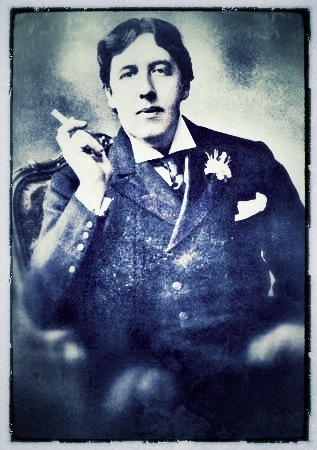
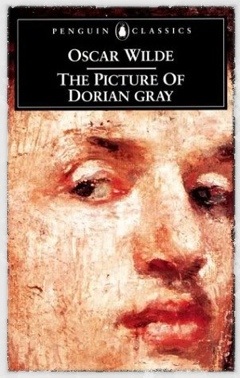
“I knew that I had come face to face with someone whose mere personality was so fascinating that, if I allowed it to do so, it would absorb my whole nature, my whole soul, my very art itself.”
-Oscar Wilde, “The Picture of Dorian Gray” Ch. 1

It’s dashed hard to write something when you have the whole of space and time from which to choose. I wanted to pick something that would hopefully be a little different, maybe even a little interesting. I’d like to introduce you to my work by with an exploration of Obsession: one of the central themes of my Work in Progress, a collection of short stories entitled “Phantasmagoria”.
For better or worse, obsession is at the heart of almost every action undertaken by my characters. Their personalities are irrational, obsessive and they love and hate to extremes.
The idea of a fascination which drives one to the edge of one’s personality is intriguing. “The Picture of Dorian Gray” has had a great deal of influence over me.
Most definitions of “Obsession” focus on it as a negative concept. Words like “dominate” “beset” “haunt” “disturbing” “excessive” and “unreasonable” abound. Apparently the word itself comes from the Latin root “Obsessio” meaning to blockade or lay siege.
This idea of obsession as a “siege” fascinated me. It created the image of an individual as a fortress, with a battle being raged between objectivity and rationalism on the inside, and the extreme emotions of obsessive love or hate on the outside, bombarding one’s senses, battering one’s defences, seeking chinks in the battlements for ingress. This notion leads to the natural inference that if the defences are breached and you are overcome, the obsession will overwhelm and destroy you. I concluded that according to this notion obsession does not come from within; it is the result of an influence, supposedly negative, from without. It is a corrupting influence on the pureness of our existence. To continue the example from “Dorian Gray”: Dorian’s fixation with his youth and beauty is a result of the external influence of the painting. Basil Hallward’s fixation with Dorian is a result of Dorian coming into Hallward’s studio to sit for the painting.
But is this really the case? The changes in the picture are wrought by Dorian’s own soul, the corruption is within, it is only given form externally. Of course it can be argued that the influence of Lord Henry sets Dorian on his destructive course, but I would counter that Dorian’s vanity, curiosity and flirtatious nature are visible from chapter one. Lord Henry merely provides the opportunity. The same is true for Basil: Although it can be argued that he is vulnerable; he has lowered his guard, to follow the original metaphor, and allowed himself to become infatuated with his new acquaintance, he has actively sought the sensation of obsession as it allows him to create his best work. Too late, he realises his mistake in courting danger:
“The reason I will not exhibit this picture is that I am afraid that I have shown in it the secret of my own soul.” (-Chapter 1)
And here Basil hits the nail right on the head: Obsession is a heightened state leading to enhanced creativity. It is an exploration of the inner workings of the soul which exposes our deepest thoughts and allows us to recreate them as art. Obsession spreads through your being and examines every dark corner. It brings darkness into the light and pushes light into the darkness. Through obsession you can discover truth about yourself and the world around you.
Or you can use your new perception to create truths about the world. Yes it can be dangerous, but growth and creativity cannot be experienced without stepping beyond the bounds of what is safe.
In “The Picture of Dorian Gray” the obsessions of Basil and Dorian ultimately destroy them both. While I would posit that obsession comes from within us, I do not underestimate the part played by the external influence: our obsession leads us to discovery through a focus on something-or someone- else. The classification of obsession rests on the question of whether or not the subject is worthy . If the subject is unworthy the attachment is described as obsession. However, if the subject is lofty and worthy we call it something else entirely. We call it love.
“Difference of object does not alter singleness of passion. It merely intensifies it. We can have in life but one great experience at best, and the secret of life is to reproduce that experience as often as possible.” (-Wilde, “The Picture of Dorian Gray”)
And how do we determine whether or not the subject is worthy? This requires objectivity, which obsession precludes and often the determination cannot be made until the infatuation is over. Until it is too late.
So it turns out there is a fine line between love and obsession, as there is between desire and hate, religion and fanaticism.
Obsession breeds art: the whole of “The Picture of Dorian Gray” deals with this subject. Relentless thinking, questioning, self-doubt and fixation on something outside of ourselves breeds the best art and reveals the truths at the core of our beings. Whether those truths ought to see the light of day only we can decide, but often at that stage it is often far too late.
So the characters of “Phantasmagoria” battle with obsession. And it’s possible that some of those obsessions are mine, working their way out of my mind and onto the page. Like Basil Hallward, I occasionally wonder if too much of my soul is on view, but if my work turns out half as well as Basil’s, I would probably consider the experience to be worth it.
“If this girl can give a soul to those who have lived without one, if she can create the sense of beauty in people whose lives have been sordid and ugly, if she can strip them of their selfishness and lend them tears for sorrows that are not their own, she is worthy of all your adoration, worthy of the adoration of the world”- Oscar Wilde, The Picture of Dorian Gray Ch. 7
Did I just write a whole post about Oscar Wilde, obsession and sort-of-philosophy, but still manage to make it all about me? Wait, what do they call that? Oh, yes. Self-obsession.

20111111-221808.jpg

20111111-221835.jpg

20111111-221902.jpg